Borobudur Temple

enjoy your travel journey by visit the culture heritage site of human civilization in Borobudur Temple.

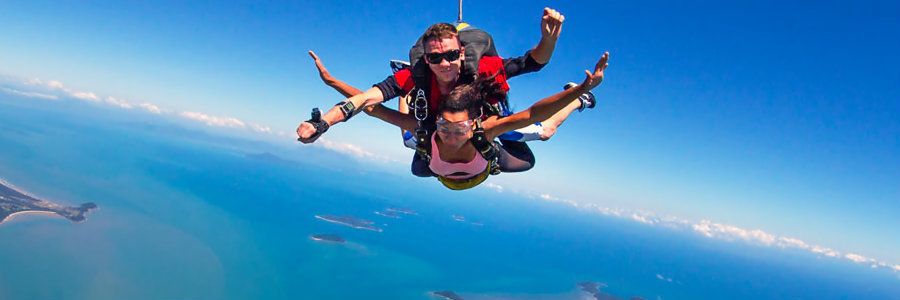
Skydive at Great Barrier Reef

feel your adrenaline increase when skydiving at whitesunday

Rio de Janeiro

Explore the amazing City

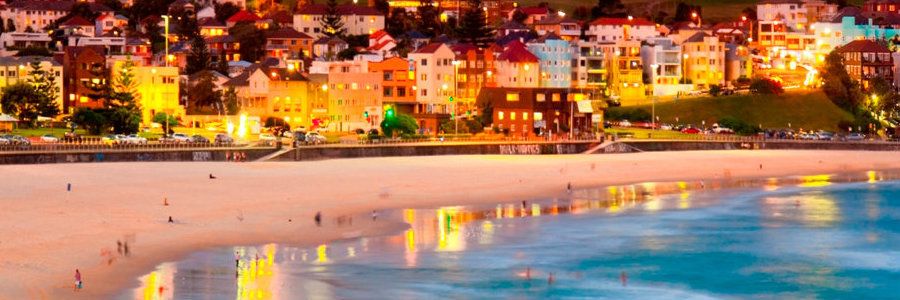
Enjoy the beauty of Bondi Beach

don't miss to enjoy the romantic atmosphere of bondi beach at the night.

Let's become traveller

Prepare Your self to uncover the beauty of the world.

Showing posts with label Asia. Show all posts

Wednesday, July 1, 2015

Kuta Beach


About...


Once a sleepy village with a quiet, beautiful sweep of beach, Kuta today has become a popular beach destination in its own right, alive with tourists from all over the world, swimming, surfing or sunbathing by the beach. Others, casually dressed in shorts, T-shirts and flip-flops stroll along its main road, shopping around or enjoying meals at its many open air restaurants. When in Kuta you know that you are in a holiday town, and people here are in a holiday mood. 
Back in the 1960’s the only hotel was the Kuta Beach Hotel, but soon without much planning, Kuta developed rapidly into a haunt for surfers and backpackers, while the high end market preferred to stay at the more sedate Sanur village on the opposite side of the peninsula.


With time, Kuta’s popularity grew, and shops, restaurants, discos hotels, - from the simple to the exclusive - sprang up along the main road from Kuta to Legian, catering to the ever increasing holiday crowd, that not only included international tourists but also domestic visitors from Jakarta and other big cities. 
On the beach, people enjoy parasailing, banana boat trips or swimming Women offer traditional Indonesian massage on the beach, others are seen plaiting hair. 
Before sunset, crowds rush to the beach waiting to watch Kuta’s legendary sunsets. Then as darkness falls, Kuta’s nightlife starts to throb with loud music from bars and restaurants, while shops stay open till late at night. Kuta’s main attraction is that everyone can enjoy the town without any prescribed dress code. 
Many famous international bands and celebrities have voluntarily played and sung here enlivening the fun, dance and music scene of Kuta. 

One poignant reminder, however, of the tragedy that befell Kuta is a monument located next to the present Paddy’s café. The monument is erected in memory of those killed during the fatal October 2002 bomb terrorist blasts. The blasts killed more than 300 people, mostly Australian tourists and Indonesian workers. 


What to do?

Moving around Kuta its very fun and simple. You can go around on foot or you can rent a bike or motorcycleMany visitors come here to shop.
Kuta is a manufacturing center for summer wear, jewelry and decorative handicrafts that are exported all over the world. So shop here to your heart’s content for summer chic to beach wear, including wonderfully creative accessories from shoes, handbags to bracelets, necklaces and earrings. There are department stores to boutiques, to roadside stalls. Popular night spots on Kuta include the Hard Rock Café, De Ja Vu, the Bali  Globe, Paddy’s Café and many more. 


How to reached?

The first of course you must go to bali island. if you from jakarta, you can get there by flight route Jakarta-Bali. after you landed in bali, kuta beach can be reache by taxi. There are plenty of taxis that can take you to Kuta beach. You can rent these by the meter or by the hour. Taking your own car is not recommended as parking here is very tight.

Where to stay?

Kuta is the ultimate beach resort catering to any taste and budget. You may stay at five star hotels, or at clean “losmen” or home stays. In the hotel complex you will have privacy at the hotel’s own beach front or swimming pool, but when you stroll out you will be met with the hustle and bustle of the town centre. There are various foreign and local restaurants that offering international and local foods. These restaurants are available along Kuta.

Sunday, June 14, 2015

Feel amazing sunset at Ratu Boko Temple


An archaeological site known as Ratu Boko Palace, hold a great mystery and unclear history that remains unsolved. Named after the legendary King Boko, mentioned in Loro Jonggrang folklore, the 16 hectares sites is located on a plateau, about 3 kilometers from Prambanan temple complex in Yogyakarta. Consisted of temples, paseban (square stone structures), pendopo (audience hall), miniature temples, kaputren and bathing place, the complex can provide a memorable cultural experience as well as great beauty of sunset from the top of fascinating nature. A great selection of hotels can accompany visitors to also enjoy the historical and cultural sites in Yogyakarta, Solo, or Magelang, including Sultan’s palaces, handicraft industries and other great temples.

THE HISTORY
The history of Ratu Boko is unclear, and much of what is understood about the site comes from inscriptions and even folklore. The oldest inscription found on the site is believed to date back to 792AD, naming the site Abhayagiri Wihara. Archaeologists believe that the ruler of the Saliendra Dynasty between 760-780, Rakai Panangkaran, built Ratu Boko after he resigned from his leadership. It is said that he resigned because he wanted to find spiritual peace and concentrate on religious matters. Abhayagiri Wihara means ‘peaceful Buddhist monastery’. The site chosen has fairly spectacular views. The name of the site changed to Walaing Kraton in an inscription known as the Mandyasih inscription. In the local language, Kraton means Palace. It was Rakai Walaing pu Kumbhayoni, who was recognized as a king and ruled the dynasty from 856-863 AD, who changed the name of the site.

During the 17th Century, a Dutch man H.J.DeGraff noted that Europeans coming to Indonesia had reported a heritage site, and referred to it being the palace of Prabu Boko, a king who came originally from Bali. This is the Prabu Boko of the Loro Djonggrang folklore. A mix of Buddhist and Hindu structures are found on the complex, including the Buddhist Dyani Budha, Stupika, Terakota Tablet, and a gold and silver plaque with a Buddhist inscription, three small Hindu temples, as well as Yoni, a Durga statue, a Ganesha statue and a plaque with an inscription to Rudra, the other name for the god Shiva.

STRUCTURE DESAIGN
The site splits neatly into four areas. The building located on terraces up the hill with the front yar located on the west side. There are three terraces, with each terrace divided by andesite stone fence.
West
Approximately 2 hectares, this area is known by locals as Mount Tlatar – hill of arranged stones. The hill sides are quite steep and only parts of it are used for farming. The archaeological finds here have been interesting: a sedimentary rock pathway, small and large ponds, as well as local and foreign earthenware.
Central
The large stone gates are impressive, the first gate has three entrances, and the second gate has five entrances. The shape of these entrances is known as Paduraksa and is a traditional Javanese construction. Not far from the gates there is a limestone Batu Putih temple, the name means ‘white stone’.
There is also a structure that consists of two levels which measures 26 metres square. The centre is a deep square hole. It is speculated that this would have been a crematorium.
This zone also has a large pond and a series of base stones which would have held building pillars. Using the traditional building techniques of the time, the pillars walls and roof would have been made from organic materials, so they are no longer remaining.

Southeast
Evidence exists of an audience hall or pavilion surrounded by a stone wall with another Paduraksa entrance way. The position of where the pillars would have been located is evident. A rectangular pool is nearby, as well as three small temples. Another series of round and rectangular pools is in this area.
East
The Eastern area has more ponds and also a series of caves. The caves are carved into the rock. The Lanang Cave houses three white stone statues. Stairs down to some of the caves have been carved in to the hillside rock. A statue of Buddha is also found in this area.

Borobudur Temple "The Largest Budha temple on the earth"


About...
Floating above the landscape of central java like a series of concentric circle that forms a giant mandala, there isi borobudur temple, the largest Buddhist  monument in the world. even though there is no written record of who built the temple first, it is belived that Borobudur Temple was built between AD 780 and 840 when The syailendra dynasty ruled the region.
The building was abandoned for centuries and buried beneath layers of volcanic ash from Mount Merapi with only local people knew of its existence. In 1814, the British ruler of Java, Sir Thomas Stanford Raffles, appointed a team led by Cornelius to investigate a hill, which, according to many local inhabitants, was the site of an ancient monument. The discovery got the Borobudur Temple worldwide attention, but it was not until 1835 that the entire area of the temple has been cleared. Unfortunately, the Dutch colonial government gave away eight containers full of Borobudur statues as presents for the King Chulalongkorn of Siam during his visit to Indonesia in 1896. The relics are still on display in the National Museum of Bangkok.


Restoration
In 1885, the Chairman of the Archaeological Society in Yogyakarta, Yzerman, discovered the hidden reliefs at the base of the temple. These hidden reliefs revealed some Sanskrit instructions left for the carver, with very distinctive lettering that uncovered the date of the construction of the temple: the middle of the 9th century, the time when Sailendra dynasty ruled the area. In 1907, a Dutchman Van Erp carried out a large scale restoration that finished in 1911. The work was significant and definitely safeguarded the temple for some time. However, many of the pieces were not put back in their original positions during the restoration. In 1956, another assessment of the temple was made by a Belgian expert who was sent by UNESCO. His assessment concluded that water damage was significant, and would need to be stemmed if the temple was to have a long term future. The hill below the temple was eroding, the foundations were being weakened and also the reliefs were being eroded. Preparatory work began in 1963, which amongst other things discovered that the hill was not a natural hill as it had always been assumed. Instead, some areas of the hill were loamy soil, mixed with stones and stone chips. The initial work assessed the scale of a restoration to be gigantic, and the Indonesian Government then submitted a proposal to UNESCO in 1968 outlining the works needed. UNESCO gave full support and commenced work to raise funds for the restoration. From 1968 to 1983, research through to restoration took place under UNESCO. Specialists from the world over came to assist in the dismantling, and re-engineering of the site. A great deal of work was also done to develop procedures to prevent the microorganisms eating away the stone. Finally, UNESCO listed Borobudur Temple as World Heritage Site in 1991.


Borobudur temple represents many layers of Buddhist theory. From a bird’s eye view, the temple is in the shape of a traditional Buddhist mandala. A mandala is central to a great deal of Buddhist and Hindu art, the basic form of most Hindu and Buddhist mandalas is a square with four entry points, and a circular centre point. Working from the exterior to the interior, three zones of consciousness are represented, with the central sphere representing unconsciousness or Nirvana.

Zone 1: Kamadhatu
This base level of Borobudur has been covered by a supporting foundation, so it is hidden from view. During an investigation by Yzerman in 1885 the original foot was discovered. Borobudur’s hidden Kamadhatu level consists of 160 reliefs depicting scenes of Karmawibhangga Sutra, the law of cause and effect. Illustrating the human behaviour of desire, the reliefs depict robbing, killing, rape, torture and defamation.

Evidence suggests that the additional base was added during the original construction of the temple. The reason for adding the base is not 100% certain, but likely to be either for stability of the structure, to prevent the base from moving, or for religious reasons – to cover up the more salacious content. The added base is 3.6m in height and 6.5m wide. A corner of the covering base has been permanently removed to allow visitors to see the hidden foot, and some of the reliefs. See image to the right. Photography of the entire collection of 160 reliefs is displayed at the Borobudur Museum which is within the Borobudur Archeological Park.

Zone 2: Rapadhatu
The transitional sphere, humans are released from worldly matters.
The four square levels of Rapadhatu contain galleries of carved stone reliefs, as well as a chain of niches containing statues of Buddha. In total there are 328 Buddha on these balustrade levels which also have a great deal of purely ornate reliefs. The Sanskrit manuscripts that are depicted on this level over 1 300 reliefs are Gandhawyuha, Lalitawistara, Jataka and Awadana. They stretch for 2.5km. In addition there are 1 212 decorative panels.

Zone 3: Arupadhatu
The highest sphere, the abode of the gods. The three circular terraces leading to a central dome or stupa represent the rising above the world, and these terraces are a great deal less ornate, the purity of form is paramount. The terraces contain circles of perforated stupas, an inverted bell shape, containing sculptures of Buddha, who face outward from the temple. There are 72 of these stupas in total. The impressive central stupa is currently not as high as the original version, which rose 42m above ground level, the base is 9.9m in diameter. Unlike the stupas surrounding it, the central stupa is empty and conflicting reports suggest that the central void contained relics, and other reports suggest it has always been empty.


The Reliefs
The total of 504 Buddha are in meditative pose, and the 6 different hand positions represented throughout the temple, often according to the direction the Buddha faces. These ‘mudra’ symbolise concepts such as charity, reasoning and fearlessness, it is said they tell a story that Buddha’s serene face does not.

The Temple Corridors
During the restoration in the early 20th century, it was discovered that two smaller temples in the region, called Pawon and Mendut, are positioned accurately in line with the Borobudur Temple. Pawon temple is located 1.15 km from Borobudur while Mendut Temple is located 3 km from Borobudur. It is believed that there is mutual religious relationship between the three temples, although the exact ritual process remains a mystery. The three temples are used to form a route for the Waisak Day Festival held each year on the day of the full moon in April or May. The festival commemorates the birth, enlightenment and the death of Gautama Buddha. This important day in the Buddhist calendar attracts many domestic and foreign tourists to see the walk in procession of local and international pilgrims from Mendut, through to Pawon and then on to Borobudur. It is a colourful and festive occasion supported by the Government of Indonesia.

How To reach?
Borobudur Temple is located in the district of Magelang, Center Java Province. the easiest way to reached this temple is with flight from jakarta to Yogyakarta. and after landed on yogyakarta, you can continue your trip from yogyakarta city to borobudur temple buy taxi, bus, or another public transportation. it take 1 hours time to reached borobudur.

Where to Stay?
yogyakarta is a famous tourist destination, many tourist come to here from domestic and foreign, there is so many hotels that you can make a place to stay. and if you stay in yogyakarta, don't missing to vissit another tourist destination, like as prambanan temple, mendut, etc.

Prambanan Temple "The biggest Hindu temple"

About..


The astonishing temples of Prambanan, believed to be the proof of love from Bandung Bondowoso to Princess Loro Jonggrang, are the best remaining examples of Java’s extended period of Hindu culture. Located 17 km northeast of Yogyakarta, the temples represent the wealth of sculptural detail and considered as one of the Indonesia’s most phenomenal examples of Hindu art. Legend says that there were once a thousand temples stand in the area, but due to a great earthquake in the 16th century, accelerated by the treasure hunters and locals searching for material, lots of the temples are gone now, although initiatives to restore the temples have been conducted to some extent.
Prambanan Temple is said to be the most beautiful Hindu temple in the world. It is the biggest temple complex in Java with three main temples dedicated to the three great Hindu divinities, Shiva, Vishnu, and Brahma, the symbols of Trimurti in Hindu belief.

According to the history, Rakai Pikatan, a Hindu prince from Sanjaya Dynasty, who had married into the ruling Buddhist Sailendra monarchy built all the temples in the Prambanan archaeological park in the 8th century AD. In its original form, the temple complex contained over 250 large and small temples. The temple compound was expanded by successive Mataram kings with the addition of the hundreds of perwara temples around the central temples. It served as the royal temple of the Kingdom of Mataram for its religious ceremonies and sacrifices. However, in the 10th century the temple was largely abandoned because the Mataram dynasty moved to East Java. It then collapsed during a major earthquake in the 16th century.
Also locally known as Roro Jonggrang, legend has it that the 1,000th statue of the temple was the statue of a slender virgin lady named Roro Jonggrang, who turned into stone by a young and powerful man named Bandung Bondowoso after her attempt to thwart Bondowoso’s effort in building a thousand temples and two wells in one night for the lady failed. Bondowoso was in love with Roro Jonggrang and asked her to marry him. However, Roro Jonggrang was full of hatred because Bondowoso killed her father; hence she tried to refuse his proposal by asking him a seemingly impossible task. As a man who had unseen troop of spirits, it was easy for Bondowoso to finish the task. After nearly a thousand temples had been built, Roro Jonggrang asked the villagers to pound rice and to set a fire in order to look like the morning had broken. This way, the spirits had no choice but left before completing the last one temple. Bondowoso realised that the lady had cheated him so he turned Roro Jonggrang into the 1,000th statue. This is a very interesting folklore that local people love to share.


STRUCTURAL DESAIGN

The high structures are typical of Hindu architecture, and the plan of the temple complex is a Mandala, as is Borobudur. As a symbol of the Hindu cosmos, the temple is vertically divided into three parts, both vertically and in plan.

Bhurloka
The base of the temples, as well as the outer square is the underworld. It was a large space marked by a rectangular wall. This is a place for ordinary folk, mortals, both human and animal. This is the place where lust and desire are commonplace. It is an unholy area.

Bhuvarloka
The central body of the temples and the middle square of the complex, represents the ‘middle world’ the place for those who have left their worldly possessions. This is where people begin to see the light of truth. The middle world had four rows of 224 small individual shrines, where all shrines are identical.

Svarloka
The top of the temples and the innermost square represents the realm of the gods, the holiest zone, and is crowned. Three 16 temples that consist of 3 main temples: Brahma the Creator, Shiva the Destroyer, and Vishnu the Keeper. Shiva temple is the biggest and the tallest amongst all with 47.6m high, while Brahma and Vishnu are 33m high. In addition to the three main temples, there are three Wahana Temples, four Kelir Temples, two Apit Temples and four Patok Temples.

WORSHIPING ANCESTORS
It is understood that when a king or prominent person died, the ashes of the deceased along with various objects representing physical and spiritual symbols of the cosmos, were placed in a stone casket.

This casket was placed in a shaft in the base of a temple, above it was built a statue of a god, of whom the deceased was said to be an incarnation. This statue then becomes the object of worship for those honouring and worshipping the king. Ancestor worship has been an Indonesian cultural tradition since prehistoric times, and it has been adapted into the local adaptations of Hinduism and Buddhism. Some archaeologists suggest that the idol of Shiva in the central chamber of the Prambanan’s main temple is modeled after King Balitung, of the Mataram Kingdom. One of the possible instigators of the temple building.
The casket found in the well of the Siva temple at Prambanan was sitting on a pile of charcoal, earth and animal bones. It contained a variety of objects, including, coins, jewels, precious metals and ashes. Gold sheets with inscriptions of Varuna, the god of the sea, and Parvata, the god of the mountains were also found.

What To do?

At the largest Hindu temple complex in Southeast Asia, you can do anythings:
1. Getting to know the literary arts and Hindu stories
2. Hunting Photos
3.Walking around the temple complex
and if you want to enjoy Prambanan in different ways, came on the night of the full moon each month at 20:00 to 22:00. At this time, was held Ramayana ballet performances on the outdoor Trimurti Stage with The third temple god which highlighted by the lamp as the background.

 Performances at the open stage is only done during the dry season, while in the rainy season, the show moved to the location of the covered stage.
How to reach?

Prambanan can be reached with easily by flight to Special District Of Yogyakarta that served by several national airline. if you come from another country, the first you must go to Jakarta and then conecting flight with route Jakarta-jogja, it takes time 45 minute to reached yogyakarta. then after landed at Adi Sucipto international airport yogyakarta, you can go to Prambanan temple by taxi, bus, or other public transportation.

Where to Stay?

Don't worry about where you'll stay, Prambanan Temple is so close with the city of yogyakarta, and there is so many hotel with varying rates. and of course you can also enjoy the tourist attractions in Yogyakarta.

Friday, June 12, 2015

Raja Ampat "The Lost Paradise"


Raja Ampat from the top
About...

     Raja Ampat or 'Four Kings' is the name given to four beautiful islands in eastern Indonesia. A name that comes from a local myth. The four main islands is Waigeo, Salawati, Batanta, and Misool which produce the ancient rock paintings. Tourists who love the underwater scenery come from all over the world to Raja Ampat to enjoy the marvelous of the underwater scenery. You can Start your activity with diving to enjoy the amazing Raja Ampat underwater scenery, Explore the vertical walls underwater and feel the tension when you see the magnificent underwater wealth. Although you pounding when ocean currents oscillate but it certainly will be an unforgettable experience in Raja Ampat. 
View of Misool Island
     Region of the islands in the Raja Ampat is very broad, covering 4.6 million acres of land and sea that is home to 540 species of coral, 1,511 species of fish, and 700 species of molluscs. The wealth of sea biota has made Raja Ampat as a living library of the collection of coral reefs and marine life of the most diverse in the world. In fact, according to a report of The Nature Conservancy and Conservation International, there are about 75% of the world's marine species living in this amazing island.For a moment you might think like being in a dream, but this is not an illusion. 

What To Do?

  When you plunge underwater dive into the note with details of marine animals will greet you. Pygmy seahorses can be closer to your fingers as if to greet shaking hands. Mantaray and wobbegongs will swim with you.Tuna, giant trevaliies, snapper, barracuda and even helped welcome you under the sea, and if it was not enough, what if there is a new friend that is friendly dugong fish like to swim with you.

     Do not miss too busy to observe small fish keep his territory back and forth. If you are lucky may be able to swim with sea turtles.Natural beauty, as if completely untouched and the main attraction here. No need expression beauty blue sky or the lush green island, because of what was on land and under the sea will tell you "Welcome to the Raja Ampat; This is a tropical paradise of the richest marine biodiversity in the world today. 

     The Raja Ampat You can also see the "sea ghost", that is precisely in the eastern part Waigeo, in front of the village Urbinasopen and Yesner.There is a unique and interesting natural phenomenon and can only be seen every end of the year. sea ghost is a light that come from the surface of the sea, this light lasts about 10-18 minutes. Locals refer to this phenomenon as the "sea ghost".

Swimming with whale shark at cendrawasih bay

This phenomenon is more than just a beautiful view of the sunset, and you will be hope to enjoy it while relaxing on a boat. so don't miss  to ignore this phenomenon with your camera. Besides diving you can also try to surround the area of ​​Raja Ampat by boat. 
There are two types of boats that you can rent, speed boat and long boat.speed boat can carry 15 passengers and takes about 1 hour 40 minutes, at a cost of Rp2,000,000 or $ US 180, while long boat carrying 10 passengers and takes about 2-3 hours, with Rp1.200.000 or $ US100,the price can change any time.a few tips for you, You can rent a small boat if you want to explore this island more freely.  


Raja Ampat Underwater sea
The islands of Raja Ampat has four main islands and a hundreds of small islands around it that you can explore. In addition, this region also has a lot of coral which is a beautiful natural phenomenon. There are a variety of unique fauna such as Wilson's bird-of-paradise, paradise red, maleo Waigeo, kus-kus. For these types of flora, you can see orchids, palms, and many others.
traditional culture from the people of Raja Ampat
and try to doing Tracking activities around the island to discover the hidden beauty such as the waterfalls and ancient caves. 

How To Reach?

Transportation Access to Raja Ampat can be reached by flight to Sorong that served by several national airlines. If you are departed from Jakarta will take 4 hours to Sorong and your flight will transit in Manado with Lion Air or Wings air. Alternatively, you can take a flight for 6 hours with sriwijaya air or garuda airways and tansit in makasar. After reached Sorong, You must continue your travel to Raja Ampat with aboard the flight from Sorong to Raja Ampat by Susi Air with capacity of 14 people, or you can cross the sea for 2 hours from Sorong to Waisai by ships route Sorong-Saonek and Waisai. Fery departs from Sorong at 13.00, Route from Sorong to Waisai takes approximately 1.5 to 2 hours. The ferry back to Sorong from Waisai at 11.00. In Sorong also available speedboat that you can be rent if you want to get around. Sorong just like any other city, you can get almost everything here, although with more expensive price.

Where To Stay? 

View of misool eco resort

Don't worry about a place to stay, Raja Ampat provided various hotel withvarying rates. so you can choose which one that you like. in addition,lodge here also serves traditional Indonesian food which delicious.

When to Go? 

Now, are you interested to visiting Raja Ampat? The best time to visit is in October or November, because the sea conditions in Raja Ampat is very quiet, so it'ss perfect for those of you who want you explore the natural beauty of Raja Ampat.