Borobudur Temple

enjoy your travel journey by visit the culture heritage site of human civilization in Borobudur Temple.

Skydive at Great Barrier Reef

feel your adrenaline increase when skydiving at whitesunday

Rio de Janeiro

Explore the amazing City

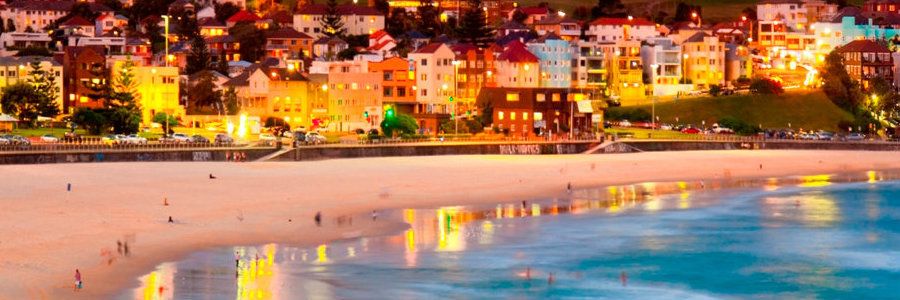
Enjoy the beauty of Bondi Beach

don't miss to enjoy the romantic atmosphere of bondi beach at the night.

Let's become traveller

Prepare Your self to uncover the beauty of the world.

Sunday, June 21, 2015

San Ignacio MinÍ

The most famous of all the reducciones, San Ignacio Miní was originally founded in 1610 in the Guayrá region, in what is now Brazil. After the bandeirantes attacked the mission in 1631, the Jesuits moved thousands of miles southwards through the jungle, stopping several times en route at various temporary settlements before finally re-establishing the reducción at its present site in 1696.

The ruins occupy six blocks at the northeastern end of the village of San Ignacio: from the bus stop head east along Avenida Sarmiento for two blocks and turn left onto Rivadavia. Follow Rivadavia, which skirts around the ruins, for six blocks and then turn right onto Alberdi, where you’ll find the entrance to the site. At the entrance, there’s a small but worthwhile museum with a series of themed rooms depicting various aspects of Guaraní and mission life, plus a detailed maquette of the entire reducción. The site itself is dotted with panels lending context to the ruins, with audio provided in various languages, including English. Free, more detailed tours in rapid-fire Spanish depart regularly from the museum. There are also popular sound and light shows each evening.

On entering the settlement itself, you’ll come first to rows of simple viviendas, or living quarters, a series of six to ten adjoining one-roomed structures, each of which housed a Guaraní family. Like all the mission settlements, these are constructed in a mixture of basaltic rock and sandstone. Passing between the viviendas, you arrive at the spacious Plaza de Armas, whose emerald grass provides a stunning contrast with the rich red hues of the sandstone. At the southern end of the plaza, and dominating the entire site, stands the magnificent facade of San Ignacio’s church, designed, like Santa Ana’s, by the Italian architect Brazanelli. The roof and much of the interior have long since crumbled away, but two large chunks of wall on either side of the entrance remain, rising out of the ruins like two great Baroque wings. 
Though somewhat eroded, many fine details can still be made out: two columns flank either side of the doorway and much of the walls’ surface is covered with decorative bas-relief sculpture executed by Guaraní craftsmen. Most striking are the pair of angels that face each other high up on either side of the entrance, while a more austere touch is added by the prominent insignia of the Jesuit order on the right-hand side of the entrance.

To the left of the main entrance, you can wander around the cloisters and priests’ quarters, where a number of other fine doorways and carvings remain. Particularly striking is the doorway connecting the cloisters with the church baptistry, flanked by ribbed columns with heavily moulded bases and still retaining a triangular pediment over the arched doorway.


Source: www.roughguides.com
Saturday, June 20, 2015

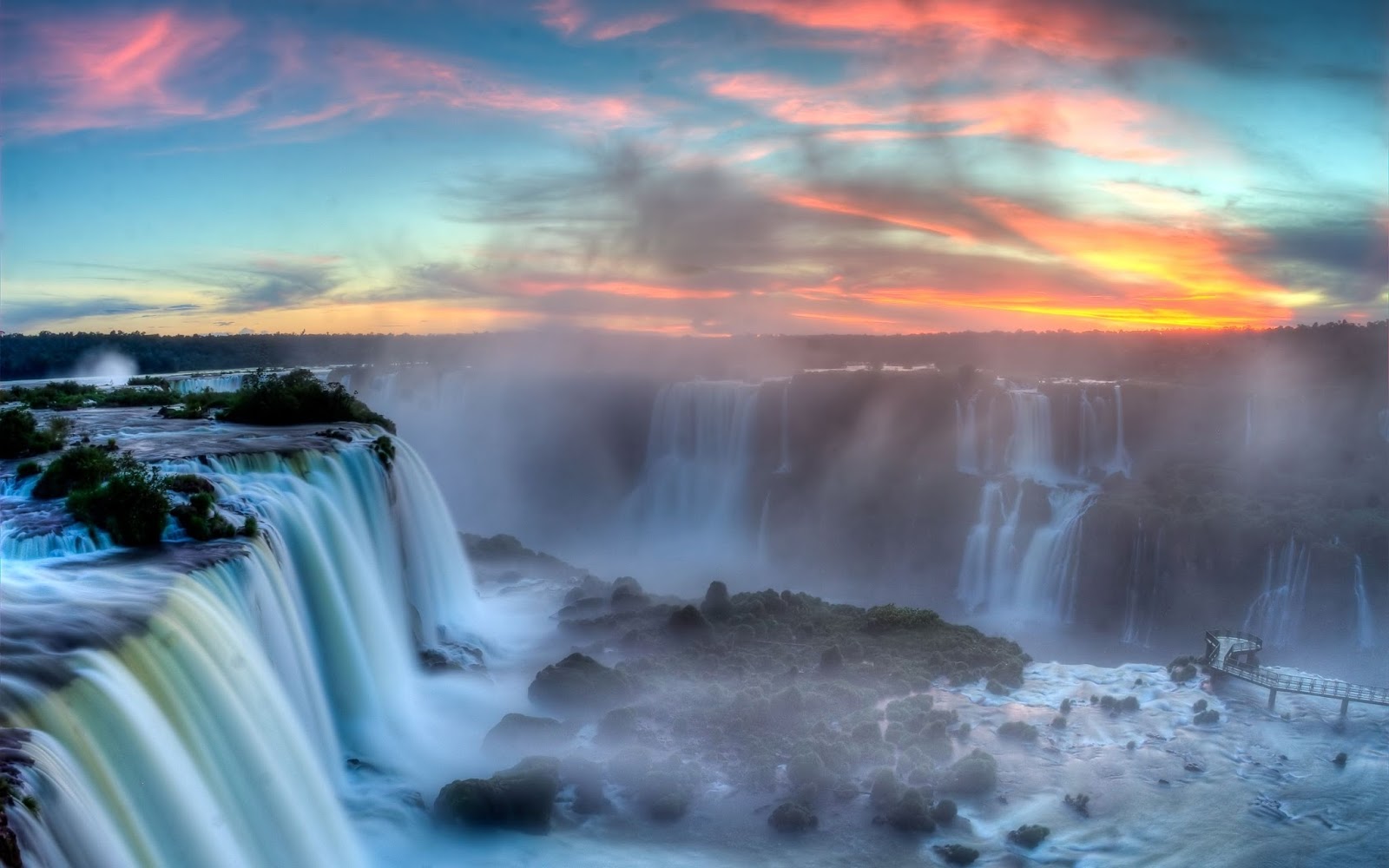
Iguazú falls

Composed of over 250 separate cascades, and straddling the border between Argentina and Brazil, the Iguazú Falls (or “Cataratas”, as they are known locally) are quite simply the world’s most dramatic waterfalls. Set among the exotic-looking subtropical forests of Parque Nacional Iguazú in Argentina, and Parque Nacional do Iguaçu in Brazil, the Falls tumble for a couple of kilometres over a complex set of cliffs from the Río Iguazú Superior to the Río Iguazú Inferior below. At their heart is the dizzying Garganta del Diablo, a powerhouse display of natural forces in which 1800 cubic metres of water per second hurtle over a 3km semicircle of rock into the boiling river canyon 70m below.


The first Europeans to encounter the Falls, in 1542, were members of a Spanish expedition led by Cabeza de Vaca, who named them the Saltos de Santa María. For nearly five hundred years, however, they remained practically forgotten in this remote corner of Argentina, and it wasn’t until the early twentieth century that tourism began to arrive, encouraged by the then governor of Misiones, Juan J. Lanusse. The first hotel was constructed in 1922, right by the Falls, and by the mid-twentieth century Iguazú was firmly on the tourist map. Today, the Falls are one of Latin America’s major tourist attractions, with around two million visitors each year.

The Argentine side

The vast majority of the Iguazú Falls lie on the Argentine side of the border, within the Parque Nacional Iguazú. This side offers the most extensive experience of the cataratas, thanks to its well-planned system of trails and catwalks taking you both below and above the waters – most notably to the Garganta del Diablo. The surrounding forest also offers excellent opportunities to view the region’s wildlife. The main settlement on this side, Puerto Iguazú, lies approximately 18km northwest of the park entrance with a slightly sleepy, villagey feel, though its popularity with backpackers has livened it up a bit in recent years.
Garganta del Diablo
To visit the Garganta del Diablo (“Devil’s Throat”), you must take the Tren de la selva (“Jungle Train”), which leaves regularly from Estación Cataratas, for the Estación Garganta del Diablo, 3km southeast (fare included in entrance fee). From here a catwalk with a small viewing platform takes you to within just a few metres of the staggering, sheer drop of water formed by the union of several immensely powerful waterfalls around a kind of horseshoe. As the water crashes over the edge, it plunges into a dazzling opaque whiteness in which it is impossible to distinguish mist from water. The vencejos often swirl around the waterfall in all directions, forming giant swarms that sometimes swoop up towards you and perform miraculous acrobatic twists and turns – quite a sight. If you’re bringing your camera, make sure you’ve an airtight bag to stash it in, as the platform is invariably showered with a fine spray.

The Brazilian side

To complete your trip to Iguazú, you should also try and visit the Brazilian side. You’ll only need a few hours but it’s worth crossing in order to take photos of the Falls – particularly in the morning – as it provides you with a superb panorama of the points you will have visited close up in Argentina, as well as its own close encounter with the Garganta del Diablo. Though it offers a more passive experience, the view is more panoramic and the photo opportunities are amazing. You can cross for the day but, if you want to stay in Brazil, the city of Foz do Iguaçu lies a good 20km northwest of the access to the park. Much larger than Puerto Iguazú and with a modern, urban feel, Foz is neither the most beautiful nor most exotic of Brazilian cities, but if you’ve been travelling in Argentina for a while it’ll give you the chance to hear another language, try some different food and sample some lively nightlife. Foz definitely feels less safe than its Argentine counterpart – a fact much exaggerated by Argentines, but nonetheless you should be on your guard in the city.


Source: www.roughguides.com

Wednesday, June 17, 2015

Explore The King of Landforms in europe

The most majestic of all landscapes is the fjord, a glacial formation that carves out deep, narrow valleys filled with sparkling waters. High walls preside over the water, providing spectacular views and excellent hiking. Although there are many glacial features that resemble fjords throughout the world, the truest and most beautiful fjords can be found in Europe.

Fjords are the most ideal landform for exhilarating outdoor recreation. Geirangerfjord in Norway boasts snow-covered mountain peaks and cascading waterfalls, forcing travelers to catch their breath as they hike. For a completely different experience, take a sightseeing cruise or kayak by water and look up in wonder upon the fjords, mountain peaks and cliffs.


Discover the fishing towns among the East Fjords in Iceland and explore the majestic mountains, rolling hills, and crystal lakes via hiking and horseback riding. For an even more nature-filled experience, visit Killary Harbor in Ireland, a fjord covered in lush emerald flora. Take a break from the everyday with a ride on the beach on the back of a Connemara pony and bring your binoculars to see local pods of dolphins jump among the waters.
If exploring a fjord isn’t on your bucket list, be sure to add it. You won’t be able to forget the mighty majesty of Europe’s incredible fjords. 

Source : Visiteurope.com

Tuesday, June 16, 2015

Cape Town's Beaches


On Cape Town’s Atlantic seaboard, wide sandy stretches, dramatic views and blazing sunsets make up for the bracing sea temperatures that these beaches of Cape Town are known for. While the water might be chilly, Clifton’s four beaches are among Cape Town’s most popular, attracting a trendier set that like to sunbathe, play volleyball and hang out with friends.

Nearby Camps Bay beach is a Cape Town weekend favourite, edged by trendy eateries and characterised by large crowds. A little further on you’ll find Llandudno, a surfers’ paradise rimmed by some of the city’s most expensive real estate, and Sandy Bay, where not even a swimming costume is required.
The warmer Indian Ocean waters of the False Bay seaboard are better suited to swimming. Best known among these beaches is Muizenberg, where multi-coloured Victorian-style beach boxes hark back to a more genteel time.

There are some good Cape Town beaches in nearby Simon's Town, one of the oldest Cape settlements with a strong naval tradition, reflected in the number of naval museums and monuments in the town.
When the wind is up at the beaches in Cape Town, people head to Boulders Beach, which is sheltered by large, rounded rocks and is home to a protected colony of endangered African penguins.
Other popular Cape Town beaches are Noordhoek Beach, which is good for long walks and popular with surfers and kite fliers; Kommetjie Beach, another popular surfers' hangout; and Bloubergstrand, which offers the famous view of Table Mountain across the bay. 

Cape Town is served by an international airport. The beaches themselves are all easily accessible by road and most are served by a variety of bus and tour companies. Best time to visit is Winters are cold and wet, but Cape Town summers have perfect beach weather with extra-long days. Highlights include a trip up Table Mountain, a tour to Robben Island, and a few hours (or days) in the nearby Cape Winelands. Access to most beaches is free. Some beaches, like Boulders that's in a national park, charge a nominal entrance fee. Cape Town has arguably the highest concentration of restaurants in the country, many of which are found on or close to the beachfront. Try fresh fish or a Cape Malay meal for an authentic taste of the city.

Source :southafrica.net

Monday, June 15, 2015

Emmrentia DAM at Johannesburg


Emmarentia Dam is situated less than 6km from the Johannesburg city centre, and just a few minutes from Sandton, making it the ideal location for anyone in town on business who wants to experience the natural side of the city.The suburb of Greenside is aptly named, boasting an abundance of outdoor splendor. The Johannesburg Botanical Gardens, right next to the dam, are home to approximately 30 000 trees, more than 4 500 rose bushes and a stunning herb garden.Members of the Dabulamanzi Canoe Club train on this stretch of water throughout the year and most of them are extremely friendly and will happily give advice about canoeing as well as other outdoor spots to visit in the city. 
Fish that can be caught in Emmarentia Dam include bass, barbel and carp. A freshwater fishing license is required, which you can obtain from the South African Post Office (SAPO). Avian life at Emmarentia Dam includes bishops, weavers, moorhens and geese, as well as many other species of water birds. This is a popular dog walking spot and a great place to meet other canine lovers if you happen to be one.
 
Photographers, in particular, will enjoy Emmarentia during the autumn months (April and May) when the leaves on the trees start to change. There are often very vivid thunder storms in the summer months (November to March), during which spectacular photographs of lightning above the water can be taken. There are an abundance of nightlife options down the road from Emmarentia Dam, in the form of the restaurants and bars in Gleneagles Road, which remain festive until the early hours of the morning. 
Emmarentia Dam is in the Johannesburg suburb of Greenside, well serviced by taxis and buses.
Johannesburg is at it’s greenest between November and April, but Emmarentia Dam is open to the public throughout the year. The Johannesburg Botanical Gardens are adjacent to the dam. The suburb of Greenside is worth exploring as is the nearby suburb of Parkhurst. If you are interested in birds, of which their are many species around the dam, bring binoculars and a camera. A hat and sunscreen are also recommended.


Source : southafrica.net

Bondi Beach

Bondi Beach is one of Australia's most famous beaches and well-known worldwide. It has probably featured on more postcards and more television shows and films than any other in Australia. Each year tens of thousands of people, from backpackers to billionaires, take to the golden sands of this wide, one-kilometre long city beach expanse to walk, jog, or just soak up the sun. Being only 10 kilometres from the city centre, Bondi Beach is one of Sydney's busiest beaches. There's a host of events held here all year round from community art shows to city to surf running marathons. Bondi Beach is one of Sydney's most visited beaches.

Throughout the year the beach hosts many local and international events from the annual City to Surf fun run to the Festival of the Winds kite flying festival. On Christmas Day, at the height of the Australian summer, it has become a tradition for families and travellers to meet and celebrate on the beach. It's a special place to be on New Year's Eve with thousands of revellers watching the local fireworks. You may have to buy a ticket to these events because of their popularity. Bondi Beach is also fun in winter, with an ice-skating rink built as part of the Bondi Winter Magic Festival. Events often centre on the heritage-listed Bondi Pavilion Community Centre which has a theatre and exhibition gallery and an outdoor amphitheatre. Check out the Marine Discovery Centre inside and learn about Australia's amazing sea creatures.

Bondi is also the home of Australian surf-lifesaving. The Bondi Life Saving Club, formed in 1906, is Australia's oldest. In summer it is patrolled by volunteer lifesavers, making sure swimmers stay between Australia's iconic red and yellow beach safety flags. On Sunday mornings in summer you can watch the ‘Nippers', Australia's future life-savers, learning the ropes from a very young age. The calm protected waters are also a perfect place to learn to surf with a number of local surf schools to teach you how.

The main street along the beachfront is Campbell Parade, where you'll find a range of stylish surf and fashion shops, outdoor cafes and bars. It's a popular meeting place for Sydney's cafe society. The main streets leading back from the beach are Hall Street, Roscoe Street, Curlewis Street and Beach Road. Hall Street has cool fashion and designer labels while Curlewis Street has many art galleries. Every Sunday, the grounds of the local public school host the Bondi Beach Markets, a flea market where you may pick up some bargains including locally produced jewellery, handicrafts and vintage clothing.
Dine at the upmarket restaurant, Bondi Icebergs, named in honour of a group of dedicated locals who swim at the beach all year round, and where local celebrities can often be seen. To discover more stunning beaches nearby, take the trail to Tamarama, Bronte and Coogee via the scenic coastal walk. From the cliffs on the six-kilometre Bondi to Coogee Walk you can see the entire expanse of Bondi Beach. Each spring, the Bondi to Tamarama Beach section of the walk is transformed by the Sculpture by the Sea exhibition with works by local artists.
So if you are coming to Sydney you can't miss a visit to Bondi Beach, about 30 minutes by public transport from the city centre.
Republished from: Australia.com

The Great Barrier Reef

Explore the World Heritage-listed Great Barrier Reef, which stretches for more than 2,000 kilometres along the Queensland coastline. Snorkel, scuba dive or take a scenic flight over the reef.  Sail the palm-topped Whitsundays, trek the ancient Daintree Rainforest or relax on luxurious tropical islands such as Hayman and Lizard. Island-hop or stay in one of the many coastal getaways like Cairns, Hervey Bay, Missions Beach or Port Douglas.
The 2,300-kilometre Great Barrier Reef is the largest coral reef system in the world. Home to diverse marine life of the most vivid colours, experiencing the Reef is a life-changing adventure, whether you do it in luxury or on a budget. See the Reef by scuba, snorkel, glass-bottom boat, jet ski, semi-submersible, sail boat, from the air or even skydive to completely immerse yourself in this wonder of the world. you can doing many activities in there.
1. Snorkel Magnetic Island on the Great Barrier Reef

Hire a mask and snorkel to explore the island’s colourful reef. Magnetic Island is just a 25-minute ferry ride from Townsville. This is just one of the many places from which you can access the Reef and there are just as many tourism operators eager to help you experience this underwater wonder.
2. Seaplane over Heart Reef

Create the perfect romantic surprise for a loved one by flying over the world-famous natural wonder that is Heart Reef. This scenic flight is just one of the tours offered by Air Whitsunday and GSL Aviation with the white silica sand of Whitehaven Beach on Whitsunday Island is also on the menu. It’s a great opportunity to see from the amazing beauty of the Great Barrier Reef.
3. See the Turtles at Townsville’s Reef HQ Aquarium

See the sights without getting wet at this educational, interactive coral reef aquarium. Perfect for young children and non-swimmers who want to understand the majesty of the coral kingdom, Reef HQ boasts a Turtle Hospital, where sick and injured turtles are rehabilitated. It also offers sleepovers, where you can observe the nocturnal habits of reef creatures.
4. Cruise Michaelmas Cay and Snorkel Paradise Reef

Visit the Reef in style on board this 25-metre, high-performance catamaran. Sailing daily from Cairns to Michaelmas Cay and exclusive Paradise Reef, you can dive and snorkel the Reef among the turtles and colourful fish, or just lie on the deck and soak up the sun. You can even join a glass-bottom boat tour at Michaelmas Cay.
5. Skydive above the Whitsunday Islands

You’ll take home bragging rights and lifelong memories when you see the Great Barrier Reef from this mind-blowing perspective. Skydive into the most picturesque drop zone in the world and experience the greatest reef thrill there is. The experienced tandem instructors will handle the parachute, so all you have to do is enjoy the incredible view.
6. Stay on a Luxury Catamaran on the Great Barrier Reef

Join a sleepover on the Reef aboard the luxurious Reef Encounter, a superb, 35-metre catamaran based at Cairns. You’ll enjoy gourmet meals and a spacious stateroom with private bathroom and air-conditioning. Enjoy two days diving, snorkelling, fishing and glass-bottom boat tours without having to return to land. Add to the excitement by joining Reef Encounter by helicopter.
7. Indulge Yourself on the One & Only Hayman Island
Explore, relax, enjoy – you can do it all on Hayman Island, located in the heart of the Great Barrier Reef. Wake up to incredible natural beauty before taking advantage of a range of services and activities, including bushwalks, snorkelling, private dining and wildlife experiences. If that’s not enough, how about a massage while you float in the sea?
8. Get up Close to Stingrays at Daydream Island
Wade into the man-made Living Reef and hand-feed the debarbed stingrays. Experienced marine biologists will explain the life cycle of these amazing creatures, as well as show you local coral and how to handle starfish and sea cucumbers. Daydream’s 2,650 square-metre Living Reef is home to more than 140 species of marine fish and 83 species of coral.

Republished from : www.australia.com